Mighty Molly

Team Molly

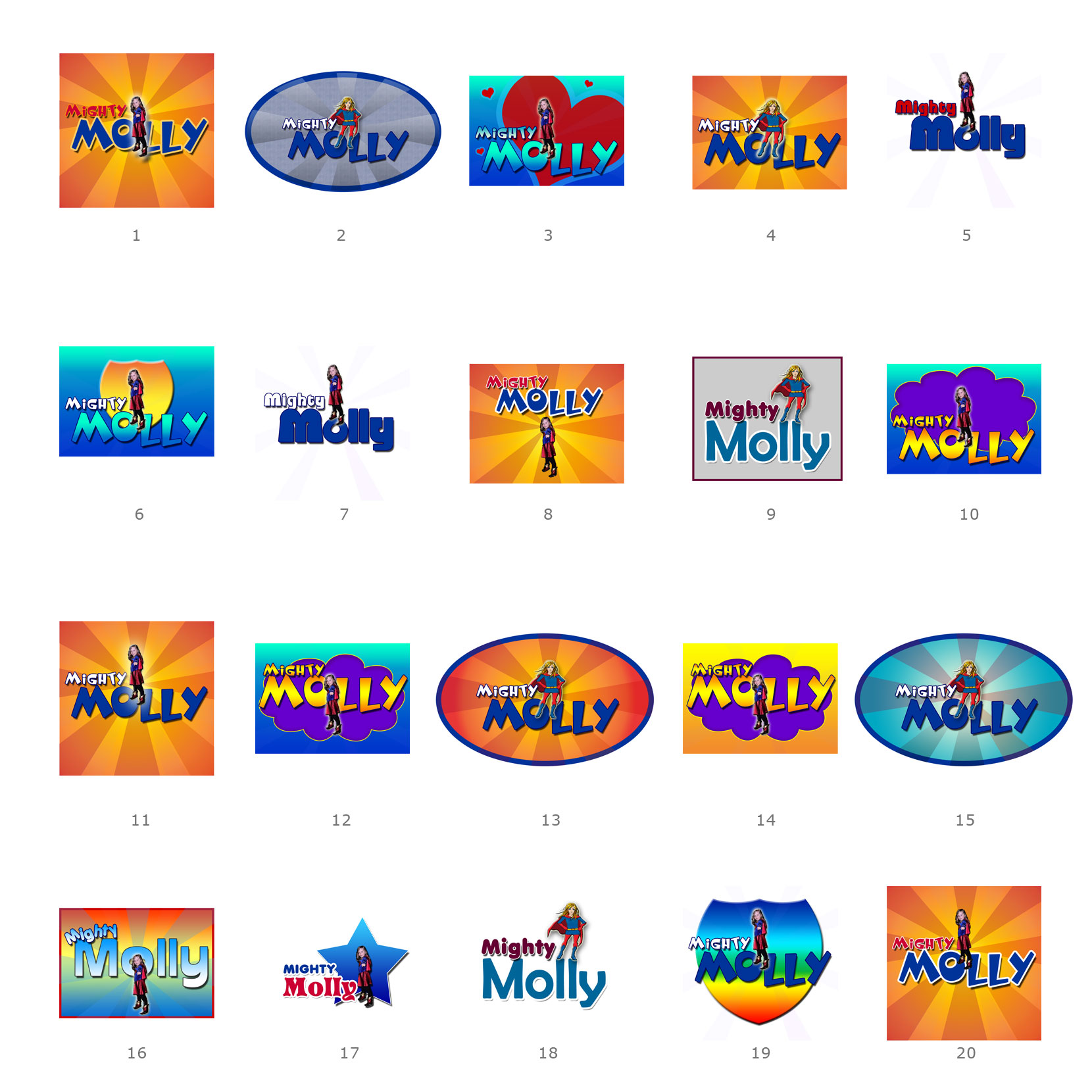
Five year-old Molly Anderson has been battling leukemia since May, 2008.  She is a brave young superhero, and thousands of people are cheering her on.  Since Molly has superhero status, we thought it fitting that she have her own fancy superimage.  Check out some ideas for Mighty Molly! 

Vote for your favorite(s).

Mighty Molly


Mighty Molly

Molly’s own words:

Hi, my name is Molly. I am 5 years old and quite a character. I love super heroes and making people laugh. I am super tough and super strong. I was diagnosed on May 28th with Acute lymphoblastic leukemia Tcell (ALL). My treatment is long but I plan to be a super fighter the whole way.

Thanks for supporting Molly Anderson!

Susan

Spotlight on…Implicit assumptions

Do hidden biases affect your leadership and training?

Project Implicit

Project Implicit provides a short online test that provides the opportunity to assess your conscious and unconscious preferences for over 90 different topics ranging from “pets to political issues, ethnic groups to sports teams, and entertainers to styles of music.” By taking this test, you’ll be assisting psychological research on thoughts and feelings.

The individual sessions take 10-15 minutes. At the end of the session, you will get some information about the study and a summary of your results. Interesting and informative!

About the project

Project Implicit blends basic research and educational outreach in a virtual laboratory at which visitors can examine their own hidden biases. Project Implicit is the product of research by three scientists whose work produced a new approach to understanding of attitudes, biases, and stereotypes.

The Project Implicit site (implicit.harvard.edu) has been functioning as a hands-on science museum exhibit, allowing web visitors to experience the manner in which human minds display the effects of stereotypic and prejudicial associations acquired from their socio-cultural environment.

Take me to Project Implicit!

Here’s the scoop on the test behind the project:

It is well known that people don’t always ‘speak their minds’, and it is suspected that people don’t always ‘know their minds’. Understanding such divergences is important to scientific psychology.

The Implicit Association Test (IAT) shows us that we learn to quickly link or associate sets of ideas in our brains. We might tend to associate the words “sunny” with “good” and “overcast” with “bad”. Besides linking the words, we are linking the concepts and feelings that go with those words and we act on those feelings. The IAT is a way to see how closely our brains have linked certain concepts. The strength of the links is hard wired in our brains.

Note that the IAT has not gone without controversy (see Wall Street Journal; Science News Article).

Your turn

So, now that your interest is piqued…

How can we incorporate what we know abotu implicit assumptions into our learning and development practices?  Let’s discuss ways to uncover hidden biases and optimize the training experience!

More information:

  1. Dr. Anthony Greenwald/IAT Materials
  2. http://faculty.washington.edu/agg/IATmaterials/PDFs/R&W.JEPG(2004).pdf
Web 2.0 F.A.C.T.S.

F.A.C.T.S. about Web 2.0
(Fun And Cool Technology Stuff)


If you haven’t visited CommonCraft yet, you are missing out on at least 3 minutes of fabulous Web 2.0 education. The Show is a series of short explanatory videos that are free and sharable on the Web.


Blogs

Google Docs

Social Networking

Social Bookmarking

Twitter

Podcasting

RSS

Wikis


Visual menus

I’m wild about Cathy Moore’s post on Visual menus: structure with style

My favorite part is her brainstorm list of visual elements (graphics) that could become menus:

  • Timeline
  • Flow chart
  • Mind map
  • The product or item that the course examines
  • Head shots of people asking questions (each question links to the section that answers it)
  • Map of a building or place
  • Game board  

So, here’s your challenge:

Can you think of other graphic elements that could serve as visual menus/maps?

Submit your ideas through the “comments” feature below!

Susan


Spotlight on…

Sharon Bowman

Looking for tips and articles to help you energize your training sessions? Check out Sharon Bowman’s sparkly site: http://www.bowperson.com/articles.htm.  Sharon’s site is chock full of web site links, newsletters, catalogs, and books that will help you become a master at “teaching it quick and making it stick!”  Here are two of her latest examples:

Stand, Stretch and Speak: Using Topic-Related Energizers.
From: Preventing Death by Lecture!
Author: Sharon L. Bowman
Format: Adobe Acrobat PDF

The Gallery Walk: An Opening, Closing, and Review Activity.
From: How To Give It So They Get It.
A more detailed version is found in: The Ten-Minute Trainer.
Author: Sharon L. Bowman
Format: Adobe Acrobat PDF