Turn Challenge into Change

https://www.facebook.com/DeTv302/videos/237636618473247/?mibextid=zDhOQc

Turn Challenge into Change: Join ‘Human Being with Dr. Susan’ on DETV Kids!
July 2025

Emotions are a powerful force in our lives, shaping our thoughts, decisions, and actions. As parents, caregivers, and educators, it’s crucial to teach our children the importance of understanding and managing their emotions. One television show segment that beautifully explores this concept is “Human Being with Dr. Susan” on DETV Kids. In this segment, Dr. Susan guides children on a journey of self-reflection, helping them name their feelings and discover the incredible power that comes with understanding and transforming challenges into positive change.

The Power of Reflection

In our fast-paced world, we often overlook the significance of self-reflection. Dr. Susan encourages children to take a moment to pause and consider how they feel. By doing so, they gain the power to understand their emotions better and, consequently, the ability to make informed choices in response to those feelings.

We’ve all experienced moments when our emotions seem overwhelming, leading to tantrums, frustration, or withdrawal. “Human Being with Dr. Susan” offers valuable tools to help children navigate these emotional waters. When we learn to reflect on our feelings, we develop our emotional intelligence, a skill that serves us well throughout our lives.

The Path from Challenge to Change

The central theme of Dr. Susan’s segment is the transformation of challenges into positive change. Life is full of hurdles and obstacles, both big and small. For children, these challenges can be as simple as sharing toys, completing school assignments, or making new friends. Through thoughtful discussion and guided activities, “Human Being with Dr. Susan” empowers kids to view these challenges as opportunities for growth.

Dr. Susan illustrates how understanding their emotions can help children make choices that lead to positive change. Instead of reacting impulsively or giving in to negative emotions, kids learn to channel their feelings into actions that can improve their situation. This crucial life skill helps children build resilience and adaptability.

Invitation to Watch “Human Being with Dr. Susan”

Are you ready to embark on a journey of emotional discovery and transformation with your child? “Human Being with Dr. Susan” on DETV Kids offers a safe and engaging platform for kids to explore their feelings, turn challenges into change, and grow emotionally. By watching the show together, you can facilitate meaningful discussions about emotions and encourage your child to apply these valuable lessons in their daily life.

“Human Being with Dr. Susan” on DETV Kids is a remarkable television show segment that promotes emotional intelligence and resilience in children. Through self-reflection, Dr. Susan empowers kids to understand their feelings, make informed choices, and transform challenges into positive change. By watching the show with your child, you can help them develop these essential life skills and set them on a path towards emotional well-being and personal growth. Don’t miss the opportunity to join Dr. Susan on this journey – tune in to DETV Kids and embark on a voyage of self-discovery and positive change today!
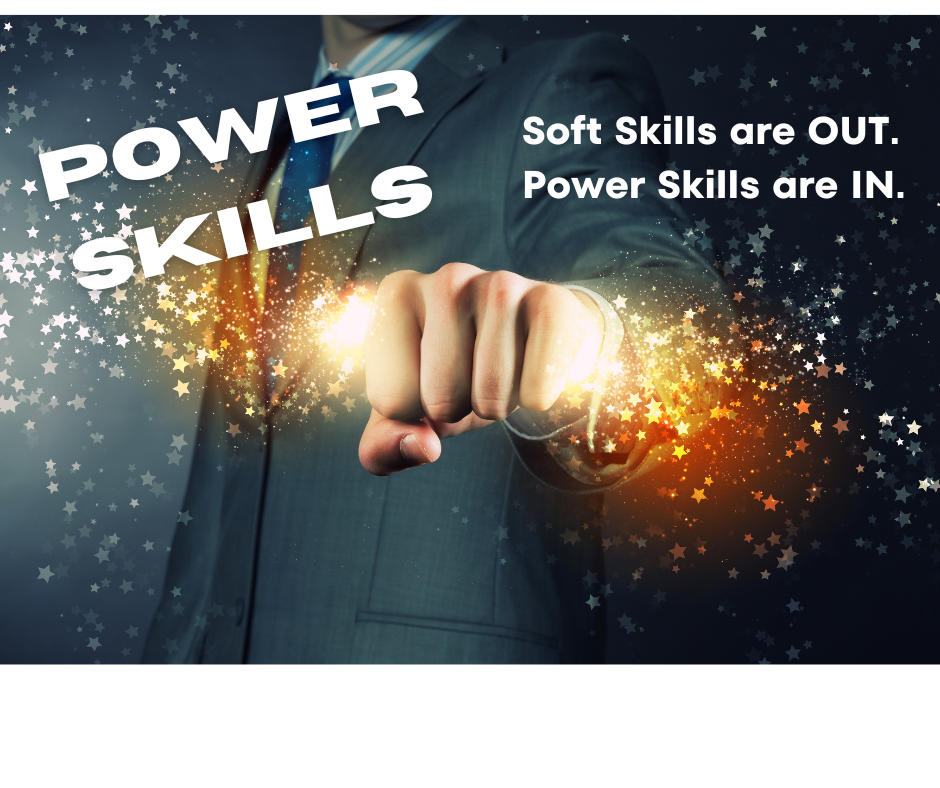
Forget “Soft” Skills: It’s all about Power Skills

Power Skills are Game Changers.

Let’s be honest, the term “soft skills” has never done these crucial abilities justice. It makes them sound fluffy and less important than those technical “hard skills.” But here’s the thing: communication, problem-solving, adaptability – these aren’t just nice-to-haves, they’re absolute game-changers.

That’s where the concept of “power skills” comes in. This shift in language reflects the growing recognition that skills like empathy, collaboration, and critical thinking are what truly drive success in today’s rapidly changing world.

Why Power Skills Matter

  • Adaptability: Technology is evolving at breakneck speed, and power skills allow you to keep up. The ability to learn new tools, pivot strategies, and roll with the changes is what separates those who thrive from those who are left behind.
  • Communication: Collaboration is the lifeblood of modern organizations. Whether it’s influencing a team, clearly presenting ideas, or negotiating solutions, strong communication builds strong teams and strong results.
  • Problem-solving: The world is messy and complex. Power skills like critical thinking and creativity allow you to break down obstacles, find innovative solutions, and navigate challenges with confidence.
  • Emotional Intelligence: Understanding your motivations, managing your emotions, and building relationships with others is essential for success. Emotional intelligence makes you a valuable team member and an effective leader.

Making the Transition

So, how do you move from seeing these as “soft skills” to unleashing their true power?

  1. Own them: Embrace the importance of your current abilities. Recognize that they are highly sought after and essential for success.
  2. Elevate them: Identify specific ways to leverage and expand upon these skills. Seek opportunities to practice them in your work and consciously strengthen those areas.
  3. Showcase them: Don’t just talk about your power skills, demonstrate them! Highlight how they’ve helped you solve problems, build strong relationships, or adapt to change in your resume, interviews, and everyday interactions.

Power skills are the key to not just surviving in the modern workplace but truly thriving. By ditching the “soft” label, embracing their importance, and proactively developing them, you’re giving yourself a competitive advantage and setting yourself up for a long, impactful career.

The Problem with Patient Centricity

Join me in a conversation with Mark Doyle from The Method, where we discuss the the challenges and opportunities of patent centricity in healthcare.

IS IT OK TO BE PATIENT OBSESSED? – SUPPORTING PHARMA TO IGNITE AND DRIVE THEIR PATIENT CENTRICITY STRATEGIES

See the article from The Method website DECEMBER 16, 2021 BY CLAIRE

“WE ALL KNOW THAT PUTTING PATIENTS AT THE HEART OF CARE WILL ULTIMATELY LEAD TO BETTER OUTCOMES. BUT WE ALSO KNOW THAT BECOMING TRULY PATIENT-CENTRIC IS NOT ALWAYS EASY.

THE PROBLEM WITH PATIENT CENTRICITY

Mark Doyle, creator of A Life in a Day, hosted a lively and interactive Zoom webinar with Susan Hendrich, Learning Director for Respiratory, Immunology and Infectious Disease at AstraZeneca, about the problem of patient centricity.

Mark and Susan spoke about the barriers to achieving patient-centric working within the pharma industry. From the danger of sacrificing the patient voice for commercial goals and making it meaningful for each and every person within the sector to the difficulty of measuring patient-centric impact.

As one of our clients, Susan is understandably passionate about putting patients at the centre of everything she does, and shares real insight into what patient centricity means to her and how she approaches it in her work.

A major highlight of the session was Mark’s provocation that the term ‘patient centricity’ may in itself be a barrier to achieving it. He posed the radical question of whether, to achieve real patient centricity, we need to find a new term that inspires and motivates change. Acknowledging that the term is contentious and provocative by design, Mark suggested that perhaps we could achieve the goal of patient centricity if we replace it with ‘patient obsessed’. It certainly led to some interesting and thought-provoking conversation!

WHY WE SHOULD BECOME ‘PATIENT OBSESSED’ INSTEAD OF PATIENT-CENTRIC

During the webinar, Mark presented his concerns about the term ‘patient centricity’. With no universal definition, it can be difficult to associate patient centricity with your own work and risks becoming nothing more than a tick box exercise.

“If everybody was truly obsessed with the patient and helping [the] patient, it has the potential to do what patient centricity says it will do, which is to radically alter the treatments, the clinical trials, the way research is conducted, the way it’s communicated to patients, the way hcps interact with patients. I believe it could radically alter and ultimately improve the lives of patients, which is what patient centricity is supposed to do….I just feel like maybe we need to push it a bit further and reignite the benefit and enthusiasm of it.”Mark Doyle

Susan agreed with the idea of being much more focused on the patient and challenged the audience to look at ways they can push this within their own companies. If a business makes the patient its focus and all activities stems from that, the corporate gains will come.

To unlock the potential of patient centricity the industry must go further. The most successful companies will be those who are able to equally balance patients’ needs with commercial goals and operations, making both a priority.

FALL: Freedom for All to Live and Learn

Simon Sinek talks about the importance of being able to fall.

Thank goodness. Because I fall. I fall a lot.

I fell last week. It was a mistake, but I am responsible for it happening and for the upset that it caused. 

Even though I try my best to be a great leader by lifting others and shining a light on their path so they can succeed, sometimes I end up being an obstacle in their path. It doesn’t feel good to make a mistake or miss a mark or disappoint someone. That’s the first arrow.

But the second arrow is dwelling on that mistake instead of taking accountability, learning from it, dusting yourself off, and moving forward.  Like my mentor once said, “Take the hit, then, bounce.”

Check out this video of Simon sharing his view on “falling.” Simon Sinek on Falling

Did you know that Babe Ruth struck out more than 1300 times? History doesn’t dwell on that fact. History remembers his home runs. And Babe Ruth didn’t dwell on those strikeouts. In fact, his philosophy was that every strikeout brought him closer to his next home run.

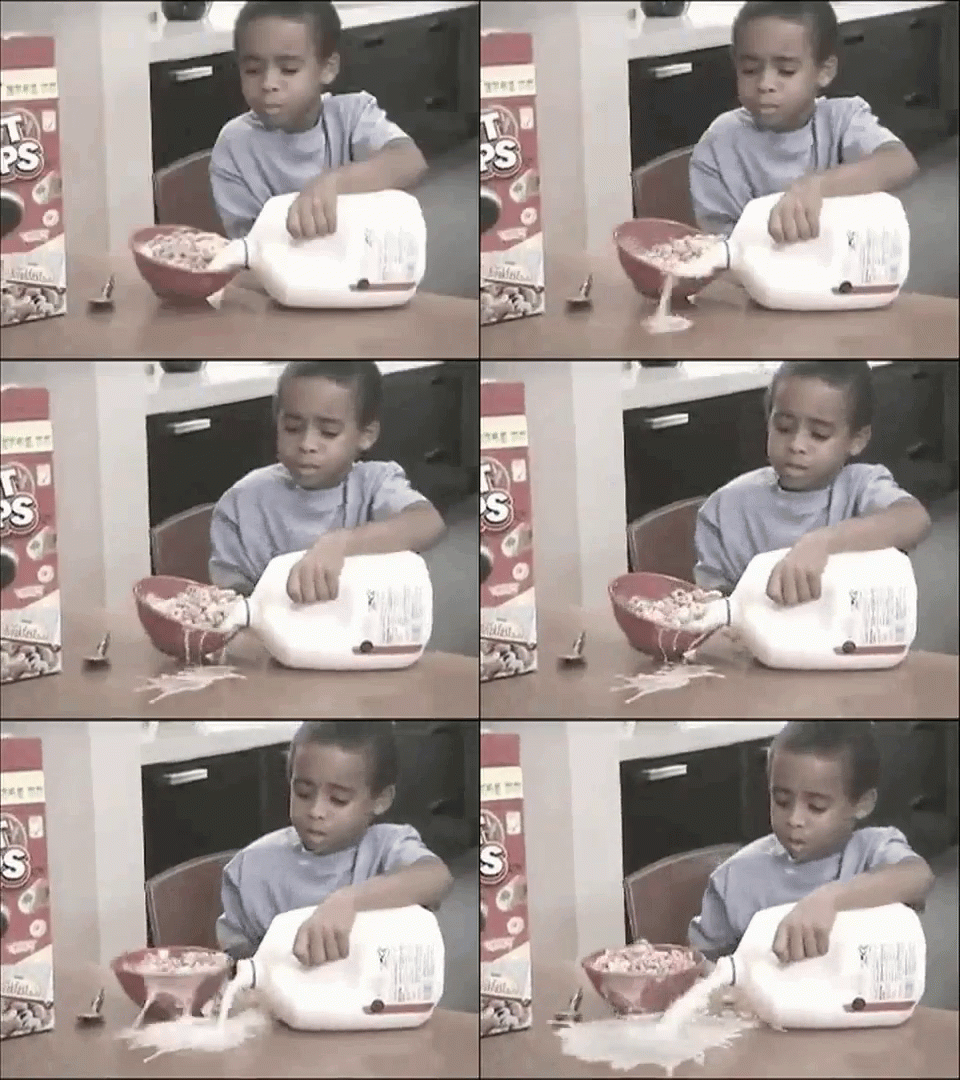
The concept of being willing to fall reminds me of the universal celebration that erupts when a staff member drops a glass in a restaurant.

Crash…Hurray!

What happens at a restaurant when a server drops a glass and it shatters on the floor? 

Fellow restaurant staff cheer and clap! Why?  here’s my theory:

  1. Most people are just trying their to do their job to the best of their ability
  2. Everybody makes mistakes
  3. A team is a village that takes care of its own
  4. Take the hit, then bounceWhen we feel safe to FALL—to have the Freedom to Live and Learn without the fear of humiliation or loss of status, the world is a better place.

What would be different if next time you were to celebrate when you FALL?  The moment when something goes awry is a chance for the culture to be tested. Use it as an opportunity to demonstrate grace, invite experimentation, and celebrate the effort it takes to clean up and start again. And remember the Japanese art of Kintsugi, where we can become stronger in the broken places. 

Love wins – when we get outside the bubble

Are you actively working to ‘Escape The Bubble’ And Learn From Opposing Views?

As Nelson Mandela taught us, “The best long-term strategy for victory is love.”

Tell me what you are doing to escape the bubble and hear “the other side“ in your attempt to navigate the world?


https://www.forbes.com/sites/rodgerdeanduncan/2019/07/09/escape-the-bubble-and-learn-from-opposing-views/