Communicating data with Infographics

Infographics: Pictures That Tell A Story…

What is an Infographic?

The term Infographic is a portmanteau of two terms, “Information” and “Graphics,” and describes the visual representation of data. Infographics help communicate complex information in a digestible manner, as they creatively present data in an understandable and engaging format.
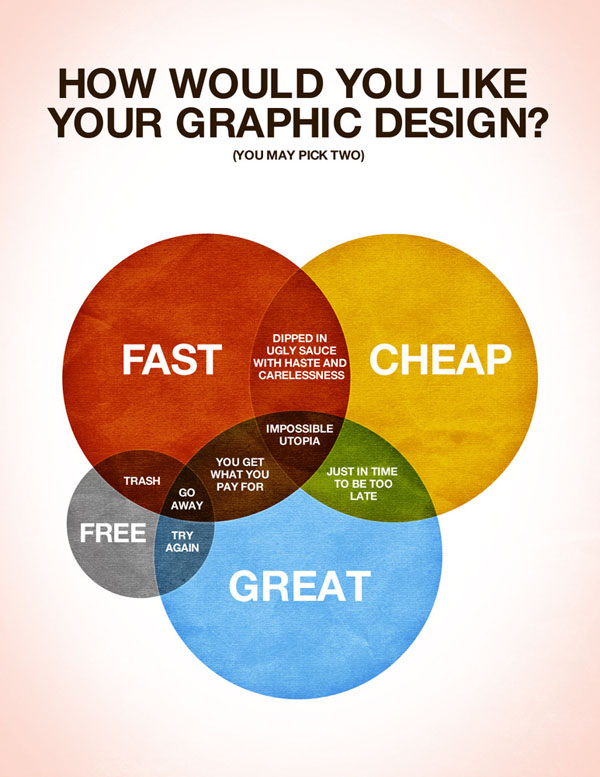
from www.DesignModo.comAs web users, with our diminishing attention spans, we’re inexorably drawn to these shiny, brightly colored messages with small, relevant, clearly-displayed nuggets of information. They’re straight to the point, usually factually interesting and often give you a wake-up call as to what those statistics really mean.  Here are some examples to fire up your i-graph engines…

Example: An Infographic that’s all about YOU

Intel’s “What About Me?”

Intel’s What About Me? is an automatic infographic generator that connects to your own Twitter, Facebook and YouTube accounts to create a profile infographic about you.

Social media users know that discovery is half the fun. With What about Me? you can capture a snapshot of your social media life and create your own colorful image, full of clues and facts about one of the most fascinating subjects in the world — YOU!

The chipmaker’s new “What About Me?” app culls info from your Facebook, Twitter and YouTube profiles to crank out a data visualization of your composite social media profile.

For instance, there’s a graphic that looks like a flower that tracks your interests based on what you tweet and write status updates about. There’s also a record of your most popular post ever and your most popular pic, your ratio of self-created updates vs. found information and “likes.”

More great Infographic examples

Free Online Tools For Creating Infographics

  • Hohli

    Hohli is an intuitive, simple online chart maker. It’s incredibly easy to pick your chart type, add some data, vary the sizes and colors and see the finished chart.

    information graphics

    Creately

    Creately lets you design easy-to-make diagrams and flow charts. You can choose from a number of purpose-designed diagram types and quickly add your data to make your own chart. The end result looks very professional.

    information graphics

    New York Times

    New York Times’ Visualization Lab lets you use statistics from recent NYTimes articles to create visualizations in various formats. You can also see other people’s visualizations and see how other people choose to display the same data.

    data graphics

    Many Eyes

    Many Eyes lets you upload your own data or use data already stored on the site. The visualizations themselves are well-designed and very professional-looking. This is definitely the easiest way to use your own data for online visualizations.

    data graphics

    Google Public Data

    Google Public Data lets you easily take public data and transform it into an infographic of your choice. These beautiful, colorful graphics simplify and communicate the data perfectly.

    data graphics

    Wordle

    You may have seen my earlier post on Wordle, which lets you create word visualizations using text you enter. There are plenty of interesting designs to choose from. Enter whole books, short passages or see what other people have used. In this example, we can see the US constitution visualised.

    Free Software For Creating Infographics

    Tableau

    Tableau is a free Windows-only software for creating visualizations. As you can see, these impressive graphs are colorful and quite unique.

Great tutorials on infographic creation:

Productivity secret: The 40-hour work week

How many hours per week do you work?

In her compelling essay, Why We Have to Go Back to a 40-Hour Work Week to Keep Our Sanity, AlterNet’s Sara Robinson lays out decades of research backing the 40-hour work week wisdom and discusses how a down economy and the “passion” of Silicon Valley helped us lose sight of these well-documented facts. She ultimately calls for the return of the 40-hour work week—not just as a route to better health, sanity, and productivity for all, but also as a way to create jobs, arguing that “[f]or every four Americans working a 50-hour week, every week, there’s one American who should have a full-time job, but doesn’t.” Robinson’s conclusion says it all:

For the good of our bodies, our families, our communities, the profitability of American companies, and the future of the country, this insanity has to stop. Working long days and weeks has been incontrovertibly proven to be the stupidest, most expensive way there is to get work done. Our bosses are depleting resources from of the human capital pool without replenishing them. They are taking time, energy, and resources that rightfully belong to us, and are part of our national common wealth.

Your turn: If you do work over 40 hours per week, why do you do so?

http://www.salon.com/2012/03/14/bring_back_the_40_hour_work_week/

Special thanks to my colleague, Kathryn Burke-Howe, from Performance Development Group for referring me to this story.

Top 5 Regrets of the Dying

If even one of these applies to you, it’s not too late to change your fate…

Top Five Regrets of the Dying
By Bronnie Ware

For many years I worked in palliative care. My patients were those who had gone home to die. Some incredibly special times were shared. I was with them for the last three to twelve weeks of their lives.
People grow a lot when they are faced with their own mortality. I learned never to underestimate someone’s capacity for growth. Some changes were phenomenal. Each experienced a variety of emotions, as expected, denial, fear, anger, remorse, more denial and eventually acceptance. Every single patient found their peace before they departed though, every one of them.
When questioned about any regrets they had or anything they would do differently, common themes surfaced again and again. Here are the most common five:

1. I wish I’d had the courage to live a life true to myself, not the life others expected of me
This was the most common regret of all. When people realize that their life is almost over and look back clearly on it, it is easy to see how many dreams have gone unfulfilled. Most people have had not honored even a half of their dreams and had to die knowing that it was due to choices they had made, or not made.

It is very important to try and honor at least some of your dreams along the way.

From the moment that you lose your health, it is too late. Health brings a freedom very few realize, until they no longer have it.

2. I wish I didn’t work so hard
This came from every male patient that I nursed. They missed their children’s youth and their partner’s companionship.

Women also spoke of this regret. But as most were from an older generation, many of the female patients had not been breadwinners. All of the men I nursed deeply regretted spending so much of their lives on the treadmill of a work existence.
By simplifying your lifestyle and making conscious choices along the way, it is possible to not need the income that you think you do. And by creating more space in your life, you become happier and more open to new opportunities, ones more suited to your new lifestyle.

3. I wish I’d had the courage to express my feelings
Many people suppressed their feelings in order to keep peace with others. Many developed illnesses relating to the bitterness and resentment they carried as a result.

As a result, they settled for a mediocre existence and never became who they were truly capable of becoming.

We cannot control the reactions of others. However, although people may initially react when you change the way you are by speaking honestly, in the end it raises the relationship to a whole new and healthier level. Either that or it releases the unhealthy relationship from your life. Either way, you win.

4. I wish I had stayed in touch with my friends
Often they would not truly realize the full benefits of old friends until their dying weeks and it was not always possible to track them down. Many had become so caught up in their own lives that they had let golden friendships slip by over the years. There were many deep regrets about not giving friendships the time and effort that they deserved. Everyone misses their friends when they are dying.

It is common for anyone in a busy lifestyle to let friendships slip. But when you are faced with your approaching death, the physical details of life fall away. People do want to get their financial affairs in order if possible. But it is not money or status that holds the true importance for them. They want to get things in order more for the benefit of those they love. Usually though, they are too ill and weary to ever manage this task. It is all comes down to love and relationships in the end. That is all that remains in the final weeks, love and relationships.

5. I wish that I had let myself be happier
This is a surprisingly common one.

Many did not realize until the end that happiness is a choice.

They had stayed stuck in old patterns and habits. The so-called ‘comfort’ of familiarity overflowed into their emotions, as well as their physical lives. Fear of change had them pretending to others, and to their selves, that they were content. When deep within, they longed to laugh properly and have silliness in their life again.
When you are on your deathbed, what others think of you is a long way from your mind. How wonderful to be able to let go and smile again, long before you are dying.

Life is a choice. It is YOUR life. Choose consciously, choose wisely, choose honestly. Choose happiness.

Original source – http://www.inspirationandchai.com/Regrets-of-the-Dying.html

Check out the book THE TOP FIVE REGRETS OF THE DYING by Bronnie Ware.

Special thanks to my high school classmate, Valarie Irons-Poppiti, for sharing this story with me.

Totally Drawsome

Draw on Your Creativity…

This ingenious little app is taking the cooliverse to new levels of fun.

Your Turn

Now, I’m asking for your help in an informal survey. If you’re playing Draw Something, please add a comment below that summarizes why it’s so much fun.

Device-agnostic Clouds Will Replace the PC

Photo: Karen Ka Ying Wong/Flickr


The Clouds Roll In…

Will the personal cloud reign supreme over the personal computer in your digital life?

Chances are, the answer is yes, according to research firm Gartner, which believes the personal cloud will replace the PC as the center of our digital lives by 2014.

“Major trends in client computing have shifted the market away from a focus on personal computers to a broader device perspective that includes smartphones, tablets and other consumer devices,” Steve Kleynhans, says research vice president at Gartner. “Emerging cloud services will become the glue that connects the web of devices that users choose to access during the different aspects of their daily life.”

This will require enterprises to “fundamentally rethink how they deliver applications and services to users.”

Smart businesses and executives will treat cloud computing as a strategy to improve their company.

Gartner says a number of factors are converging to create a perfect personal cloud storm by 2014. Just some of the reasons include:

  • Users are more technologically-savvy and have very different expectations of technology.
  • The internet and social media have empowered and emboldened users.
  • The rise of powerful, affordable mobile devices changes the equation for users.
  • Users have become innovators.

Through the democratization of technology, users of all types and status within organizations can now have similar technology available to them.

The advent of the cloud for servicing individual users opens a whole new level of opportunity. Every user can now have a scalable and nearly infinite set of resources available for whatever they need to do….

“The combination of these megatrends, coupled with advances in new enabling technologies, is ushering in the era of the personal cloud,” Gartner’s Kleynhans said. “In this new world, the specifics of devices will become less important for the organization to worry about. Users will use a collection of devices, with the PC remaining one of many options, but no one device will be the primary hub. Rather, the personal cloud will take on that role. Access to the cloud and the content stored or shared in the cloud will be managed and secured, rather than solely focusing on the device itself.”

Jon Udell, blogger for Cloudline, writes:

The cloud platform has become a real option for companies needing managed, pay-as-you-use IT capacity…I see signs of the personal cloud in services like Dropbox, Evernote, and Flickr. You can use them for free, or you can pay for higher capacity and enhanced customer service. But the personal cloud also arises from a way of thinking about, and using, any of the services the web provides.

Your turn: Will you abandon your your personal computer and move the personal cloud to the center of your digital life?