Agility and the Unlit Candle

A story of disruption, resilience, and that unexpected moment when life forces you to pivot into a new version of yourself.

This video previews “Agility” on Human Being with Dr. Susan – Episode 7. Aired 11/21/25 on Sandcastle Radio, America’s Hottest Online Variety and Music Station.

Agility and the Unlit Candle: A Personal Story from My Mom

Here’s a personal story about agility—a story from my mom. It’s a story that lives at the center of my family history—my personal history. Years ago, she wrote it down and titled it “The Unlit Candle.” It’s a story about disruption, resilience, and the unexpected moments when life forces you to pivot into a different version of yourself.

1970: A New Start in Delaware
The year was 1970. My parents were brand new to Delaware—young, hopeful, starting out with a baby girl and a handful of dreams. My mom had left her job at the University of Illinois to care for me. My dad had just started his first role as a chemist at DuPont. That’s why they moved to Wilmington. Money was tight. Life was simple, but it was good. My mom planned my first birthday with absolute joy. She baked a beautiful cake, decorated it with balloons and baby toys, and placed one large candle in the center—unlit, waiting for the moment. Family came in by train. They rented chairs for the living room. It felt like the beginning of something.

The Fire
But the morning of the celebration, just before lunch, my dad said, “Hold up. I smell smoke.” He opened the apartment door, and a wall of thick black smoke poured in. In seconds, my mom grabbed me. Everyone ran out barefoot into the sunlit parking lot, watching as the fire department fought flames pouring out of the lower level. That beautiful cake never got sliced. That candle never got lit. Later that day, once the fire was out, they were allowed back in to salvage what they could. Much was destroyed—clothes, keepsakes, their few newlywed belongings. Even the wire hangers were covered in soot and had to be scrubbed by hand. My parents had no renters’ insurance, no safety net—just each other and a baby with a birthday that never happened.

Aftermath and Unexpected Generosity
My parents relocated us to a motel. My grandmother and my aunt went back home. My mother called her family, embarrassed and overwhelmed. My Aunt Judy got on a plane immediately, traveling from Illinois to help. A local professor’s parents opened their ornate home to my parents and the baby—people they’d never met, because generosity has a way of finding people who need it. Eventually, my parents moved into a small bungalow and then into the home they still live in today. One disruption after another, and yet somehow they kept finding the next right move.

The Lesson My Mom Never Wrote
That’s the part my mom never wrote explicitly—but what the story teaches: agility is born in moments you never asked for. The moments where the plan burns down, literally or figuratively, and you’re left standing in the parking lot with nothing but a baby on your hip and a cake you never got to eat.

The Meaning of the Unlit Candle
The unlit candle became more than a story. It became a truth—a celebration that didn’t happen, plans that got erased, a version of life that didn’t survive the smoke. But also this truth: some candles don’t need to be lit to change your life. That day taught my mother—and eventually me—that agility isn’t a personal trait. It’s a response pattern. A willingness to regroup when you’re exhausted, to pivot when you’re heartbroken, to rebuild when you’ve already rebuilt more times than feels fair. It’s the ability to say, “Okay, this isn’t the story we planned, but it’s the story we’re in, and we’ll write the next chapter from here.”

Glimpses of a New Beginning
The unlit candle reminds me that every disruption contains a glimpse of a new beginning—even if you don’t see it at first, even if it’s wrapped in smoke, even if it costs you more than you thought you could bear. My mom survived that season. My parents built a life from those ashes. They restored what they could. They released what they couldn’t. And they kept moving forward.

What Agility Really Looks Like
That is agility. Not glamorous. Not poetic. Not Instagram-worthy. Just steady, human, persistent movement through uncertainty. And sometimes the most powerful symbol isn’t the candle you light—it’s the candle you never got to. I’m proud of my parents. And I think part of my agility comes from that moment when we lost everything in the fire.

___________________________

Wishing you glimpses of new beginnings, even when your candle remains unlit.

Susan Hendrich, with special thanks to my amazing Mom, Virginia Hertzenberg

__________________

Explore more with Dr. Susan

Dr. Susan’s website: http://www.sashaphilosophy.com

YouTube: https://www.youtube.com/ ⁨@susanhendrich⁩ 

LinkedIn: https://www.linkedin.com/in/hendrich/

Instagram: https://www.instagram.com/hendrich/

Facebook: https://www.facebook.com/profile.php?id=61584417516967

Turn Challenge into Change

https://www.facebook.com/DeTv302/videos/237636618473247/?mibextid=zDhOQc

Turn Challenge into Change: Join ‘Human Being with Dr. Susan’ on DETV Kids!
July 2025

Emotions are a powerful force in our lives, shaping our thoughts, decisions, and actions. As parents, caregivers, and educators, it’s crucial to teach our children the importance of understanding and managing their emotions. One television show segment that beautifully explores this concept is “Human Being with Dr. Susan” on DETV Kids. In this segment, Dr. Susan guides children on a journey of self-reflection, helping them name their feelings and discover the incredible power that comes with understanding and transforming challenges into positive change.

The Power of Reflection

In our fast-paced world, we often overlook the significance of self-reflection. Dr. Susan encourages children to take a moment to pause and consider how they feel. By doing so, they gain the power to understand their emotions better and, consequently, the ability to make informed choices in response to those feelings.

We’ve all experienced moments when our emotions seem overwhelming, leading to tantrums, frustration, or withdrawal. “Human Being with Dr. Susan” offers valuable tools to help children navigate these emotional waters. When we learn to reflect on our feelings, we develop our emotional intelligence, a skill that serves us well throughout our lives.

The Path from Challenge to Change

The central theme of Dr. Susan’s segment is the transformation of challenges into positive change. Life is full of hurdles and obstacles, both big and small. For children, these challenges can be as simple as sharing toys, completing school assignments, or making new friends. Through thoughtful discussion and guided activities, “Human Being with Dr. Susan” empowers kids to view these challenges as opportunities for growth.

Dr. Susan illustrates how understanding their emotions can help children make choices that lead to positive change. Instead of reacting impulsively or giving in to negative emotions, kids learn to channel their feelings into actions that can improve their situation. This crucial life skill helps children build resilience and adaptability.

Invitation to Watch “Human Being with Dr. Susan”

Are you ready to embark on a journey of emotional discovery and transformation with your child? “Human Being with Dr. Susan” on DETV Kids offers a safe and engaging platform for kids to explore their feelings, turn challenges into change, and grow emotionally. By watching the show together, you can facilitate meaningful discussions about emotions and encourage your child to apply these valuable lessons in their daily life.

“Human Being with Dr. Susan” on DETV Kids is a remarkable television show segment that promotes emotional intelligence and resilience in children. Through self-reflection, Dr. Susan empowers kids to understand their feelings, make informed choices, and transform challenges into positive change. By watching the show with your child, you can help them develop these essential life skills and set them on a path towards emotional well-being and personal growth. Don’t miss the opportunity to join Dr. Susan on this journey – tune in to DETV Kids and embark on a voyage of self-discovery and positive change today!

The Pot Roast Principle: Breaking Free from Outdated Traditions

Why do we do certain things in a particular way? We all have routines, traditions, and practices that we follow without much conscious thought. Often, these habits are deeply ingrained, passed down through generations, or simply adopted because, well, that’s just how it’s always been done.

Grandma's Pot Roast

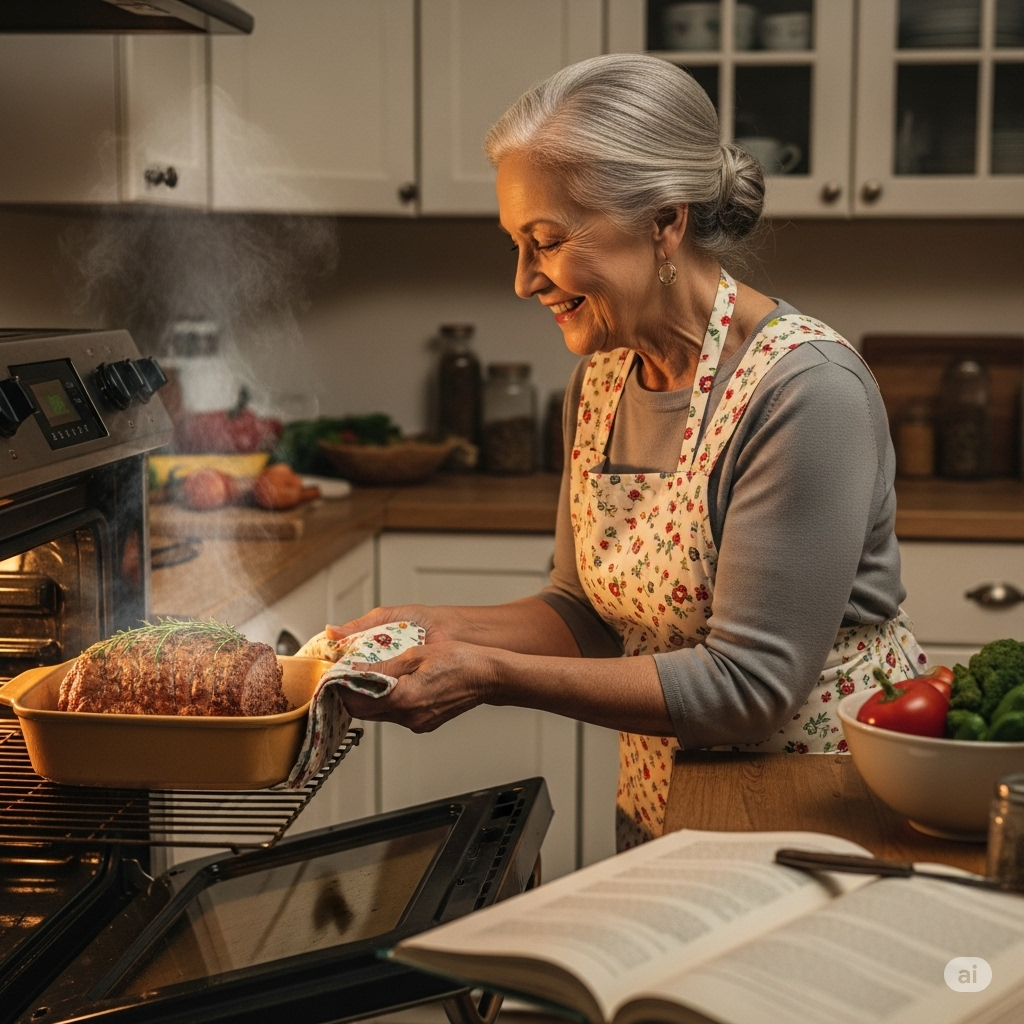
I had an enlightening conversation with a colleague today about recurrent obstacles. Our team was trying to solve a small but frustrating problem that has persisted for more than a year. As a new member of the team, eager to help, I started thinking about ways to solve the problem. All of my ideas centered on how we can do more. (You know, because that’s how we always solve this problem, by doing more.) My colleague asked me a challenging question that changed my perspective altogether: “What if the problem IS the problem?” In other words, why are we trying to solve this problem in the first place? What if the answer is to do less?

This brings to mind a classic tale, often shared in leadership and organizational development circles: The Pot Roast Story. The story goes something like this:

THE POT ROAST STORY

A young woman is preparing a pot roast, and before placing it in the oven, she carefully cuts off both ends of the roast. Her husband, observing this, asks her why she does it. She thinks for a moment and replies, “That’s how my mother always did it.” Intrigued, the husband then asks her mother, who gives the same answer: “That’s how my mother always did it.”

Finally, they decide to ask the grandmother, the original source of the culinary tradition. With a twinkle in her eye, the grandmother explains, “Because my roasting pan was too small!”

A Simple Story with Profound Implications

The pot roast story, while seemingly trivial, offers a powerful metaphor for many aspects of our lives, both personal and professional:

  • Unquestioned Assumptions: How many of our processes, procedures, or even beliefs are based on assumptions that are no longer valid, or perhaps never were? We often operate on “that’s how we’ve always done it” without ever asking “why?”
  • The Power of Tradition: Traditions can be wonderful, offering comfort, connection, and a sense of history. However, when traditions become rigid and unquestioned, they can stifle innovation and prevent us from finding more efficient or effective ways of doing things.
  • The Importance of Curiosity: The husband’s simple question, “Why?”, is the catalyst for uncovering the truth. Curiosity is a vital trait, encouraging us to explore, challenge the status quo, and seek deeper understanding.
  • Adapting to Change: The grandmother’s reason highlights the need to adapt. Her original method was a practical solution to a specific problem (a small pan). Over time, circumstances change, and our methods should evolve accordingly. Are we still cutting off the ends of our “pot roasts” when our “pans” are now much larger?
  • Leadership and Critical Thinking: In a leadership context, this story is a potent reminder to encourage critical thinking within teams. Are we fostering an environment where people feel comfortable asking “why?” Are we regularly reviewing our processes to ensure they are still relevant and efficient?

Breaking Free from the “Pot Roast” Mentality

So, how can we avoid falling into the “pot roast” trap?

  1. Ask “Why?”: Before blindly following a process, take a moment to understand its origin and purpose. Is it still serving its original function?
  2. Challenge the Status Quo: Don’t be afraid to question established norms. Just because something has always been done a certain way doesn’t mean it’s the best way.
  3. Encourage Inquiry: Foster a culture where curiosity is valued, and asking questions is encouraged, not seen as a challenge.
  4. Embrace Adaptability: Be willing to let go of old methods when new, better solutions emerge.
  5. Seek the “Grandmother’s” Wisdom: Sometimes, the most valuable insights come from those who have been around the longest and understand the historical context. But even then, apply critical thinking to their insights!

The pot roast story is more than just a charming anecdote; it’s a powerful lesson in critical thinking, adaptability, and the importance of questioning the unquestioned. By taking the time to understand the “why” behind our actions, we can unlock greater efficiency, foster innovation, and ensure we’re not just cutting off the ends of our pot roast for no good reason.

What “pot roast” traditions are you ready to examine in your own life or work? Share your thoughts in the comments below.

Change again? Good grief!

How Change is Like Grief

People experience different emotions when faced with change. Change can be viewed as a grieving process of sorts. Elisabeth Kubler-Ross described five stages of grief in her seminal work, ‘On Death and Dying’ in 1969.

The five stages include:

  • Denial
  • Anger
  • Bargaining
  • Depression
  • Acceptance (+ Moving On)

Kubler-Ross described the experiences of terminally ill patients and the psychological stages they go through when coming to terms with their condition. Her work on grieving process can be adapted to help us understand that individuals go through these same stages when faced with any big change, including changes at work.

Different Faces – Different Paces

Different people move through the stages at different speeds, and there may be some overlap between the stages. It is important for leaders to recognize this individual process. A person’s history, the organization’s history, the type of change and the consequence of change also impact an individual’s response to change and movement through the stages.

How Can Leaders Help Throughout The Stages?

Shock / Denial

  • Start communicating that there is a change early on. This minimizes the ‘Shock/Denial’ phase, as people will have begun to see that there is a need for change, even if they are unaware of the form that it will take.
  • When the change initiative is announced, give reasons that reduce complacency and highlight a need for change. Communicate in a way that is clear and touches people emotionally, not just with loads of data. Fully communicate the end vision of the change and what your intentions are.
  • Don’t try too hard to sell people on the idea that things are better for them; they are not ready to hear this.

Anger

  • Practice patience and empathy, and don’t try to suppress conflict. Provide a verbal outlet for people to vent their upset feelings. When leaders provide opportunities for grievances and frustrations to be aired constructively, bitterness and frustration can be diminished.
  • Although people will be angry that doesn’t mean that what they say has no value, they may have legitimate concerns that could affect the success of the change initiative.
  • Remember that  most likely, people are not attacking you personally. Remain calm and patient.
  • Often leaders have been made aware of a change initiative long before their teams, so although they may be at later stages (eg, be at “Acceptance/Moving on” while general staff are still at “Shock/Denial”).  Exercise patience.

Bargaining

When people start trying to bargain, ask them to give the new dispensation a chance. A lot of bargaining is done while people are still angry. Once the anger dissipates, so does much of the bargaining.

Acceptance

  • Help people acknowledge that it is the end of an era, support them in their new roles and encourage them to take responsibility. Set goals with them of which they can take ownership.
  • Continue your role as a sounding board for complaints and questions. Ask ‘How do you feel about this?’ to understand individuals’ emotional state.
  • Begin to stress the benefits of the new situation and how it can work for the individual.
  • If new teams were formed, provide help with group dynamics. People are generally less concerned with the tasks they are given than how they fit into a new group.
  • Plan for some early successes for the change initiative and then communicate them loudly. Once people can see that it is working then they will be less skeptical and more positive about the change.
  • Make sure the necessary resources are available for them to succeed, be it equipment or training or just coaching and guidance.

Moving On

Empower individuals to take the ball and run with it. Let them find ways of using the new set up to create stretch goals and encourage them to push performance.

Let employees innovate and take risks within the new set-up. Let them not only see ways of making the new system work in their favor but put those into practice.

For the individuals who really are taking the ball and running with it, reward them and promote them. Use them to show others what is possible. Having a fellow colleague really driving performance forward using the changes is worth far more than managers telling people things are/will be better. Once people can see it working for a colleague they will be far more receptive to the change.

_______________________________________

Your turn:

What “stage” of change are you leading through right now?

The Problem with Patient Centricity

Join me in a conversation with Mark Doyle from The Method, where we discuss the the challenges and opportunities of patent centricity in healthcare.

IS IT OK TO BE PATIENT OBSESSED? – SUPPORTING PHARMA TO IGNITE AND DRIVE THEIR PATIENT CENTRICITY STRATEGIES

See the article from The Method website DECEMBER 16, 2021 BY CLAIRE

“WE ALL KNOW THAT PUTTING PATIENTS AT THE HEART OF CARE WILL ULTIMATELY LEAD TO BETTER OUTCOMES. BUT WE ALSO KNOW THAT BECOMING TRULY PATIENT-CENTRIC IS NOT ALWAYS EASY.

THE PROBLEM WITH PATIENT CENTRICITY

Mark Doyle, creator of A Life in a Day, hosted a lively and interactive Zoom webinar with Susan Hendrich, Learning Director for Respiratory, Immunology and Infectious Disease at AstraZeneca, about the problem of patient centricity.

Mark and Susan spoke about the barriers to achieving patient-centric working within the pharma industry. From the danger of sacrificing the patient voice for commercial goals and making it meaningful for each and every person within the sector to the difficulty of measuring patient-centric impact.

As one of our clients, Susan is understandably passionate about putting patients at the centre of everything she does, and shares real insight into what patient centricity means to her and how she approaches it in her work.

A major highlight of the session was Mark’s provocation that the term ‘patient centricity’ may in itself be a barrier to achieving it. He posed the radical question of whether, to achieve real patient centricity, we need to find a new term that inspires and motivates change. Acknowledging that the term is contentious and provocative by design, Mark suggested that perhaps we could achieve the goal of patient centricity if we replace it with ‘patient obsessed’. It certainly led to some interesting and thought-provoking conversation!

WHY WE SHOULD BECOME ‘PATIENT OBSESSED’ INSTEAD OF PATIENT-CENTRIC

During the webinar, Mark presented his concerns about the term ‘patient centricity’. With no universal definition, it can be difficult to associate patient centricity with your own work and risks becoming nothing more than a tick box exercise.

“If everybody was truly obsessed with the patient and helping [the] patient, it has the potential to do what patient centricity says it will do, which is to radically alter the treatments, the clinical trials, the way research is conducted, the way it’s communicated to patients, the way hcps interact with patients. I believe it could radically alter and ultimately improve the lives of patients, which is what patient centricity is supposed to do….I just feel like maybe we need to push it a bit further and reignite the benefit and enthusiasm of it.”Mark Doyle

Susan agreed with the idea of being much more focused on the patient and challenged the audience to look at ways they can push this within their own companies. If a business makes the patient its focus and all activities stems from that, the corporate gains will come.

To unlock the potential of patient centricity the industry must go further. The most successful companies will be those who are able to equally balance patients’ needs with commercial goals and operations, making both a priority.