“I could be so successful, if only I had more time…”
Have you ever started the sentence, “If only I had more time…” then finished that sentence with realization that you would fill that extra time with more hassled, stressful tasks that would leave you even more exhausted than you already are?
Time, precious time
Author Harvey Mackay says that time is the one commodity that we can’t reproduce, alter, capture or revisit. We each have the same quantity of time on a given day, day after day. How we use that time makes all the difference.
Think about the Food Network television show, “Chopped,” where several chefs open a mystery box with a tiny window of time and a mission to create fabulous food fare. Invariably, one contestant groans as the clock runs out and Chef Ted shouts, “Time’s up!” The contestant stares at the unfinished dish below and states as if it’s the first time this has ever happened, “I ran out of time” as their reason for not including all of the required ingredients on their plate, or for not cooking their dish to the judges’ satisfaction. Each chef had the same ingredients, the same cooking station, the same pantry, and the same amount of time. Why were the other chefs able to finish on time with the intended delicious outcome, while Joe/Jane Too-Late is standing with a raw slab of pork on the station?
So how to make the most of this precious, limited resource? How do super-successful time managers seem to breeze through tasks and still have time to show up at the kids’ soccer games or catch a concert in the park? Continue reading →
IS IT OK TO BE PATIENT OBSESSED? – SUPPORTING PHARMA TO IGNITE AND DRIVE THEIR PATIENT CENTRICITY STRATEGIES
See the article from The Method website DECEMBER 16, 2021 BY CLAIRE
“WE ALL KNOW THAT PUTTING PATIENTS AT THE HEART OF CARE WILL ULTIMATELY LEAD TO BETTER OUTCOMES. BUT WE ALSO KNOW THAT BECOMING TRULY PATIENT-CENTRIC IS NOT ALWAYS EASY.
THE PROBLEM WITH PATIENT CENTRICITY
Mark Doyle, creator of A Life in a Day, hosted a lively and interactive Zoom webinar with Susan Hendrich, Learning Director for Respiratory, Immunology and Infectious Disease at AstraZeneca, about the problem of patient centricity.
Mark and Susan spoke about the barriers to achieving patient-centric working within the pharma industry. From the danger of sacrificing the patient voice for commercial goals and making it meaningful for each and every person within the sector to the difficulty of measuring patient-centric impact.
As one of our clients, Susan is understandably passionate about putting patients at the centre of everything she does, and shares real insight into what patient centricity means to her and how she approaches it in her work.
A major highlight of the session was Mark’s provocation that the term ‘patient centricity’ may in itself be a barrier to achieving it. He posed the radical question of whether, to achieve real patient centricity, we need to find a new term that inspires and motivates change. Acknowledging that the term is contentious and provocative by design, Mark suggested that perhaps we could achieve the goal of patient centricity if we replace it with ‘patient obsessed’. It certainly led to some interesting and thought-provoking conversation!
WHY WE SHOULD BECOME ‘PATIENT OBSESSED’ INSTEAD OF PATIENT-CENTRIC
During the webinar, Mark presented his concerns about the term ‘patient centricity’. With no universal definition, it can be difficult to associate patient centricity with your own work and risks becoming nothing more than a tick box exercise.
“If everybody was truly obsessed with the patient and helping [the] patient, it has the potential to do what patient centricity says it will do, which is to radically alter the treatments, the clinical trials, the way research is conducted, the way it’s communicated to patients, the way hcps interact with patients. I believe it could radically alter and ultimately improve the lives of patients, which is what patient centricity is supposed to do….I just feel like maybe we need to push it a bit further and reignite the benefit and enthusiasm of it.”Mark Doyle
Susan agreed with the idea of being much more focused on the patient and challenged the audience to look at ways they can push this within their own companies. If a business makes the patient its focus and all activities stems from that, the corporate gains will come.
To unlock the potential of patient centricity the industry must go further. The most successful companies will be those who are able to equally balance patients’ needs with commercial goals and operations, making both a priority.
Simon Sinek talks about the importance of being able to fall.
Thank goodness. Because I fall. I fall a lot.
I fell last week. It was a mistake, but I am responsible for it happening and for the upset that it caused. 
Even though I try my best to be a great leader by lifting others and shining a light on their path so they can succeed, sometimes I end up being an obstacle in their path. It doesn’t feel good to make a mistake or miss a mark or disappoint someone. That’s the first arrow.
But the second arrow is dwelling on that mistake instead of taking accountability, learning from it, dusting yourself off, and moving forward.  Like my mentor once said, “Take the hit, then, bounce.”
Did you know that Babe Ruth struck out more than 1300 times? History doesn’t dwell on that fact. History remembers his home runs. And Babe Ruth didn’t dwell on those strikeouts. In fact, his philosophy was that every strikeout brought him closer to his next home run.
The concept of being willing to fall reminds me of the universal celebration that erupts when a staff member drops a glass in a restaurant.
Crash…Hurray!
What happens at a restaurant when a server drops a glass and it shatters on the floor? 
Fellow restaurant staff cheer and clap! Why?  here’s my theory:
Most people are just trying their to do their job to the best of their ability
Everybody makes mistakes
A team is a village that takes care of its own
Take the hit, then bounceWhen we feel safe to FALL—to have the Freedom to Live and Learn without the fear of humiliation orloss of status, the world is a better place.
What would be different if next time you were to celebrate when you FALL?  The moment when something goes awry is a chance for the culture to be tested. Use it as an opportunity to demonstrate grace, invite experimentation, and celebrate the effort it takes to clean up and start again. And remember the Japanese art of Kintsugi, where we can become stronger in the broken places. 
Join me in a reading of Going Down Home with Daddy, by Kelly Starling Lyons, Illustrated by Daniel Minter. This heart-warming story is a reminder that we all have an important gift to share.
You might wonder what is the difference between a Mentor and a Sponsor.
MENTOR: A mentor is someone who helps you “in the room” – directly guiding, listening, coaching, and supporting you in your development.
SPONSOR; A sponsor is someone who helps you when you’re not in the room — indirectly championing your reputation, opportunities, and directly saying your name in the right moments to the right people.
So, you want a “Sponsor” to help you succeed in your career?
First, choose someone that you would like to speak on your behalf when you’re not in the room. Then, be courageous to ask them directly to be a sponsor!
Here are three things to request from your Sponsor:
SAY MY NAME: “I would love for you to say my name when you see opportunities to highlight my value in your interactions with others.”
TICKET TO THE GAME: “Would you be willing to bring me to your _____ meeting so I can see how you lead?”
SHARE YOUR FAME: “May I ask you to lend your credibility/relationship with ______ to help me make a connection with him/her?”
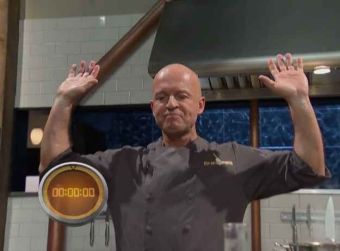 station, the same pantry, and the same amount of time. Why were the other chefs able to finish on time with the intended delicious outcome, while Joe/Jane Too-Late is standing with a raw slab of pork on the station?
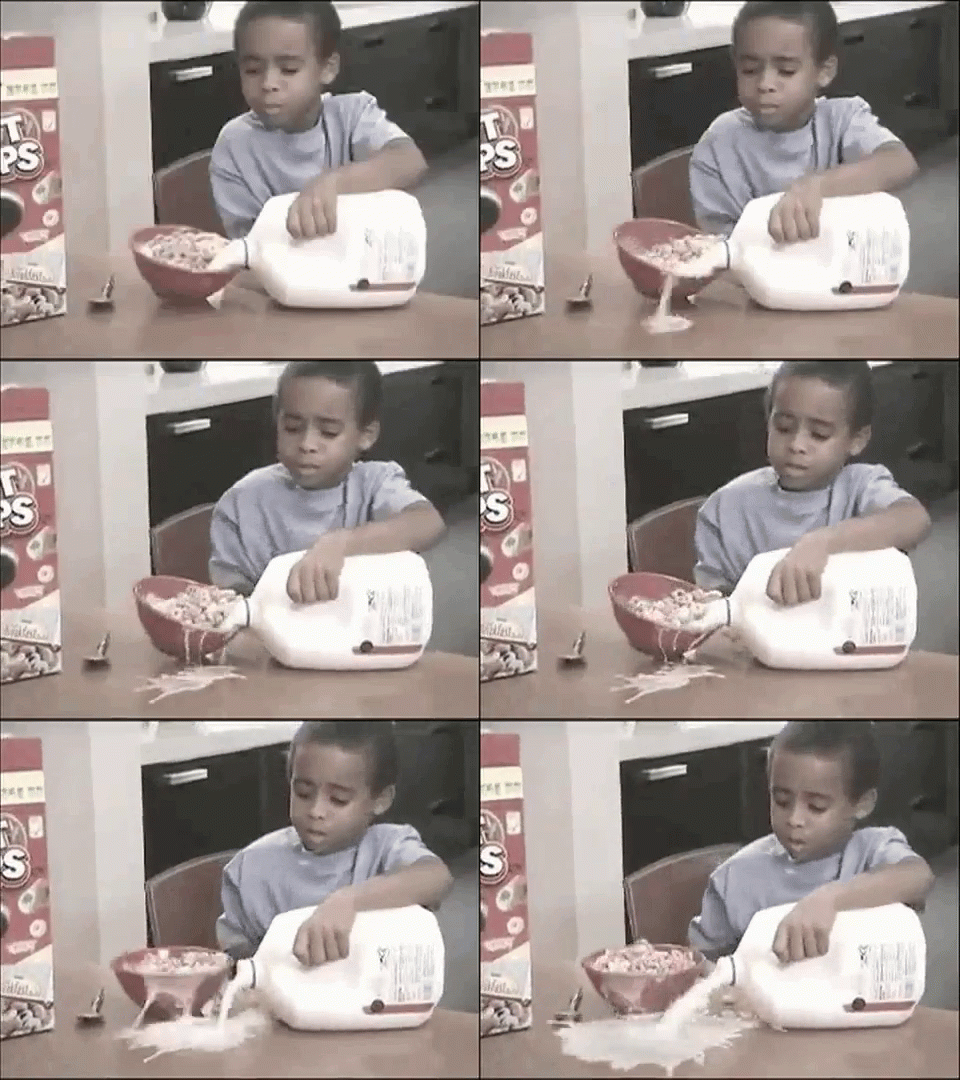 When we feel safe to FALL—to have the Freedom to Live and Learn without the fear of humiliation or loss of status, the world is a better place.
 Susan E. Hendrich