Unmask Your Brilliance: Overcoming Imposter Syndrome

What Does It Feel Like?

Imposter Syndrome is the persistent inability to believe that your success is deserved or has been legitimately achieved as a result of your own efforts or skills. It’s a feeling of being a fraud, and it’s more common than you think.

🎭

Feeling Like a Fraud

Despite your accomplishments, you have a nagging fear that you’ll be “found out” as a fake.

🍀

Attributing Success to Luck

You dismiss your achievements as luck, timing, or other external factors, not your own ability.

📉

Minimizing Achievements

You downplay your successes, believing anyone could have done what you did.

🎯

Perfectionism Pressure

You believe you must be perfect, and any small mistake proves your incompetence.

The Imposter’s Mindset: A Skewed Perspective

Imposter syndrome often involves a distorted “locus of control”—how we explain the cause of events. We have one rule for others, and a different, harsher rule for ourselves.

When OTHERS Succeed

We attribute it to their internal qualities:

  • “They’re naturally talented.”
  • “They are so intelligent and capable.”
  • “Their hard work really paid off.”

When *I* Succeed

I attribute it to external factors:

  • “I just got lucky this time.”
  • “They must have lowered the standards.”
  • “Someone helped me, I couldn’t do it alone.”

Recognizing this pattern is the first step toward changing it and owning your success.

You’re in Good Company

Feeling like an imposter doesn’t mean you are one. Countless icons of science, art, and leadership have felt the exact same way.

“The exaggerated esteem in which my lifework is held makes me very ill at ease. I feel compelled to think of myself as an involuntary swindler.”

– Albert Einstein

“I have written eleven books, but each time I think, ‘Uh oh, they’re going to find out now. I’ve run a game on everybody, and they’re going to find me out.'”

– Maya Angelou

“No matter what we’ve done, there comes a point where you think, ‘How did I get here? When are they going to discover that I am, in fact, a fraud…?'”

– Tom Hanks

“It’s almost like the better I do, the more my feeling of inadequacy actually increases… ‘Any moment, someone’s going to find out I’m a total fraud.'”

– Emma Watson

“I still have a little impostor syndrome… It doesn’t go away, that feeling that you shouldn’t take me that seriously. What do I know?”

– Michelle Obama

“I am always looking over my shoulder wondering if I measure up.”

– Sonia Sotomayor

Interactive Toolkit: Rewire Your Thinking

Actively challenging the imposter voice is key. Use these simple exercises to start building a more accurate, self-compassionate inner narrative.

Activity: “Who, Me?” “Yeah, Me!”

Challenge the voice of doubt with facts. Think of a recent success and reframe it.

My Recent Achievement:

My “Yeah, Me!” Response:

Activity: My Strengths, My Truths

Remind yourself of your inherent, undeniable qualities.

My Truth #1:

My Truth #2:

My Truth #3:

Your Toolkit for Brilliance

Integrate these concepts and strategies into your daily life to build lasting confidence and keep imposter syndrome at bay.

Talk About It

Sharing your feelings with trusted friends or mentors can lift a huge weight and show you you’re not alone.

Focus on Facts

Keep an “Accomplishment Journal.” When doubt creeps in, review the concrete evidence of your competence.

Embrace “Good Enough”

Striving for perfection is a trap. Aim for progress, not flawlessness. Mistakes are for learning, not for shame.

Artist vs. Critic

Separate the creative “Artist” from the judgmental “Critic” in your mind. Let the Artist work freely before the Critic gets a say.

Power Poses

Before a challenge, stand tall for 2 minutes. Adopt a confident posture to influence your mindset. Your body can lead your mind.

Own Your Vulnerability

As Brené Brown says, true courage is showing up and being seen when you can’t control the outcome. It’s strength, not weakness.

How Common Is It?

While exact numbers vary, studies suggest a vast majority of people—up to 82% in some research—experience these feelings at some point. It shows that feeling like an imposter is a shared human experience, not a personal defect.

Illustrative data based on multiple studies.

Remember: You are capable, you are deserving, and you belong.

Your journey is valid, and your brilliance is real.

© 2025 Susan E. Hendrich

Learn more at sashaphilosophy.com

The Pot Roast Principle: Breaking Free from Outdated Traditions

Why do we do certain things in a particular way? We all have routines, traditions, and practices that we follow without much conscious thought. Often, these habits are deeply ingrained, passed down through generations, or simply adopted because, well, that’s just how it’s always been done.

Grandma's Pot Roast

I had an enlightening conversation with a colleague today about recurrent obstacles. Our team was trying to solve a small but frustrating problem that has persisted for more than a year. As a new member of the team, eager to help, I started thinking about ways to solve the problem. All of my ideas centered on how we can do more. (You know, because that’s how we always solve this problem, by doing more.) My colleague asked me a challenging question that changed my perspective altogether: “What if the problem IS the problem?” In other words, why are we trying to solve this problem in the first place? What if the answer is to do less?

This brings to mind a classic tale, often shared in leadership and organizational development circles: The Pot Roast Story. The story goes something like this:

THE POT ROAST STORY

A young woman is preparing a pot roast, and before placing it in the oven, she carefully cuts off both ends of the roast. Her husband, observing this, asks her why she does it. She thinks for a moment and replies, “That’s how my mother always did it.” Intrigued, the husband then asks her mother, who gives the same answer: “That’s how my mother always did it.”

Finally, they decide to ask the grandmother, the original source of the culinary tradition. With a twinkle in her eye, the grandmother explains, “Because my roasting pan was too small!”

A Simple Story with Profound Implications

The pot roast story, while seemingly trivial, offers a powerful metaphor for many aspects of our lives, both personal and professional:

  • Unquestioned Assumptions: How many of our processes, procedures, or even beliefs are based on assumptions that are no longer valid, or perhaps never were? We often operate on “that’s how we’ve always done it” without ever asking “why?”
  • The Power of Tradition: Traditions can be wonderful, offering comfort, connection, and a sense of history. However, when traditions become rigid and unquestioned, they can stifle innovation and prevent us from finding more efficient or effective ways of doing things.
  • The Importance of Curiosity: The husband’s simple question, “Why?”, is the catalyst for uncovering the truth. Curiosity is a vital trait, encouraging us to explore, challenge the status quo, and seek deeper understanding.
  • Adapting to Change: The grandmother’s reason highlights the need to adapt. Her original method was a practical solution to a specific problem (a small pan). Over time, circumstances change, and our methods should evolve accordingly. Are we still cutting off the ends of our “pot roasts” when our “pans” are now much larger?
  • Leadership and Critical Thinking: In a leadership context, this story is a potent reminder to encourage critical thinking within teams. Are we fostering an environment where people feel comfortable asking “why?” Are we regularly reviewing our processes to ensure they are still relevant and efficient?

Breaking Free from the “Pot Roast” Mentality

So, how can we avoid falling into the “pot roast” trap?

  1. Ask “Why?”: Before blindly following a process, take a moment to understand its origin and purpose. Is it still serving its original function?
  2. Challenge the Status Quo: Don’t be afraid to question established norms. Just because something has always been done a certain way doesn’t mean it’s the best way.
  3. Encourage Inquiry: Foster a culture where curiosity is valued, and asking questions is encouraged, not seen as a challenge.
  4. Embrace Adaptability: Be willing to let go of old methods when new, better solutions emerge.
  5. Seek the “Grandmother’s” Wisdom: Sometimes, the most valuable insights come from those who have been around the longest and understand the historical context. But even then, apply critical thinking to their insights!

The pot roast story is more than just a charming anecdote; it’s a powerful lesson in critical thinking, adaptability, and the importance of questioning the unquestioned. By taking the time to understand the “why” behind our actions, we can unlock greater efficiency, foster innovation, and ensure we’re not just cutting off the ends of our pot roast for no good reason.

What “pot roast” traditions are you ready to examine in your own life or work? Share your thoughts in the comments below.

Future-Proof Your Career: Core Skills You Need for 2030

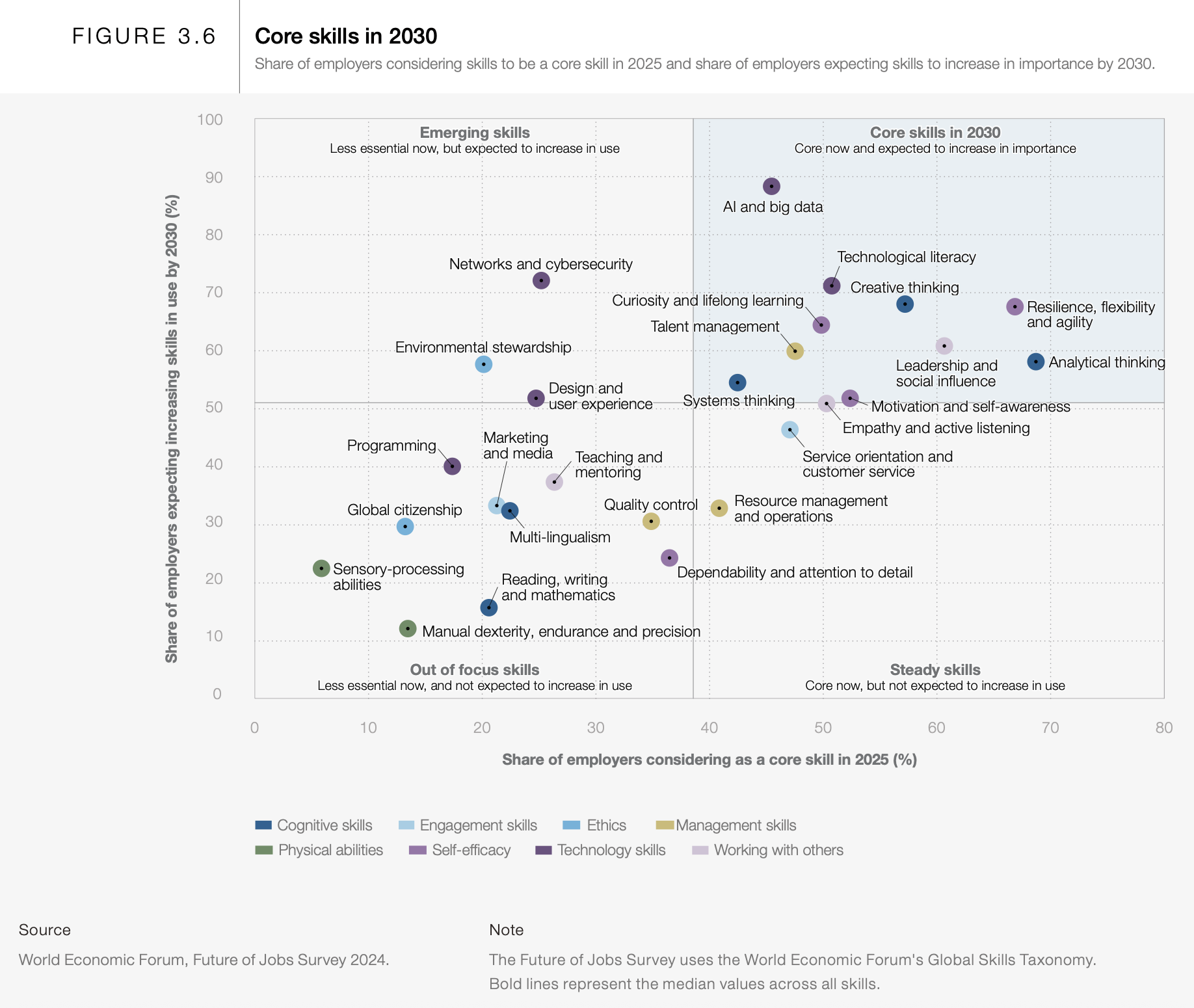
What skills will you need to succeed five years from now? The future of work is rapidly evolving, and the World Economic Forum’s Future of Jobs Report 2025 highlights the crucial skills we need to thrive in 2030. According to the report, analytical thinking is the most sought-after skill, with 7 out of 10 companies considering it essential in 2025. But it doesn’t stop there. Resilience, flexibility, agility, leadership, and social influence are also crucial. What about Artificial Intelligence (AI) and big data? Yup, it’s no surprise that these elements of technological literacy will be in high demand. But among my favorites are creative thinking, curiosity, and lifelong learning, along with motivation and self-awareness. These are skills we can build today!

Let’s explore some of the top skills you’ll need to succeed:

  • Analytical Thinking: Sharpen your ability to evaluate information, solve complex problems, and make data-driven decisions.
  • Resilience, Flexibility, and Agility: Embrace change, adapt quickly to new situations, and bounce back from setbacks.
  • Leadership and Social Influence: Inspire and motivate others, communicate effectively, and build strong relationships.

These aren’t just buzzwords; they’re the keys to unlocking future opportunities. Invest in developing these skills today, and you’ll be well-prepared to navigate the changing landscape of work and achieve your career goals. Where can you go to learn? Try LinkedIn Learning.

#FutureofWork #Skills2030 #CareerDevelopment #WorldEconomicForum

Want to read on? Check out the Future of Jobs Report 2025

Thanks for joining me. Let’s keep the conversation going. Our future depends on it.

Join the Leadership | Learning | Innovation conversation at sashaphilosophy.com.

The Trust Equation: “I don’t care what you know until I know that you care”

Trust: Unlock the Secrets of Human Connection

Trust is fundamental to our connection with others, underpinning every successful relationship, every thriving organization, and every meaningful interaction. Theodore Roosevelt is quoted as coining the phrase, “People don’t care what you know until they know that you care.”

If trust is the bedrock upon which all lasting success is built, how do we build it? How do we maintain it? How do we repair it? I’ve been reflecting on the brilliant work of David Maister, Charles Green, and Robert Galford in their book, “The Trusted Advisor,” and their powerful Trust Equation.

This Trust Equation offers a clear framework for understanding the components of trust.

  • T = Trustworthiness: The outcome we seek.
  • C = Credibility: Do people believe what I say? This isn’t just about technical expertise; it’s about being honest and complete, both intellectually and emotionally. It’s about demonstrating that I understand the facts, but also that I understand the human element.
  • R = Reliability: Do I do what I say I’ll do? It’s the consistent delivery, the repeated experience of promises kept. It’s the bedrock of dependability.
  • I = Intimacy: Can people feel safe sharing their vulnerabilities with me? This isn’t about romantic intimacy, but about emotional closeness and honesty. It’s about creating a space where people feel understood and valued.
  • S = Self-Orientation: This is the denominator, the factor that can erode trust most quickly. Am I focused on myself, or on serving others? Am I listening to understand, or to respond?

What strikes me most about this equation is its simplicity and its profound truth. It highlights that trust is multifaceted. I can be highly credible, but if I’m self-oriented, trust will suffer. I can be reliable, but if I lack intimacy, I’ll never build deep connections. I can be the most transparent (intimate) partner, but if I don’t do what I say I’ll do, trust is shattered.

Why this matters

In a world increasingly driven by transactional interactions, we are at risk of losing sight of the human element. We can forget that people don’t buy what you do; they buy why you do it. And they can only truly connect with your “why” when they trust you.

Think about the leaders you admire. They don’t just possess technical skills; they inspire trust. They are credible, reliable, intimate, and they put the needs of others before their own.

How can I apply this in my own life?

  • Focus on others: I must actively listen, ask open-ended questions, and genuinely care about the people I serve.
  • Be consistent: My actions must align with my words. I need to build a track record of reliability.
  • Be vulnerable: I need to share my own struggles and create a safe space for others to do the same.
  • Check my motives: Am I driven by a desire to serve, or by a desire for personal gain?

David Maister’s Trust Equation is a powerful reminder that building trust is an ongoing process. It requires conscious effort and a genuine commitment to serving others.

May we all strive to build organizations and relationships built on trust, where people feel valued, understood, and inspired. Because when we do, we create a world where everyone can thrive.

Want more? Check out this Trust Equation video from the THNK School of Leadership: https://www.youtube.com/watch?v=xXWDl0Vik48

Change again? Good grief!

How Change is Like Grief

People experience different emotions when faced with change. Change can be viewed as a grieving process of sorts. Elisabeth Kubler-Ross described five stages of grief in her seminal work, ‘On Death and Dying’ in 1969.

The five stages include:

  • Denial
  • Anger
  • Bargaining
  • Depression
  • Acceptance (+ Moving On)

Kubler-Ross described the experiences of terminally ill patients and the psychological stages they go through when coming to terms with their condition. Her work on grieving process can be adapted to help us understand that individuals go through these same stages when faced with any big change, including changes at work.

Different Faces – Different Paces

Different people move through the stages at different speeds, and there may be some overlap between the stages. It is important for leaders to recognize this individual process. A person’s history, the organization’s history, the type of change and the consequence of change also impact an individual’s response to change and movement through the stages.

How Can Leaders Help Throughout The Stages?

Shock / Denial

  • Start communicating that there is a change early on. This minimizes the ‘Shock/Denial’ phase, as people will have begun to see that there is a need for change, even if they are unaware of the form that it will take.
  • When the change initiative is announced, give reasons that reduce complacency and highlight a need for change. Communicate in a way that is clear and touches people emotionally, not just with loads of data. Fully communicate the end vision of the change and what your intentions are.
  • Don’t try too hard to sell people on the idea that things are better for them; they are not ready to hear this.

Anger

  • Practice patience and empathy, and don’t try to suppress conflict. Provide a verbal outlet for people to vent their upset feelings. When leaders provide opportunities for grievances and frustrations to be aired constructively, bitterness and frustration can be diminished.
  • Although people will be angry that doesn’t mean that what they say has no value, they may have legitimate concerns that could affect the success of the change initiative.
  • Remember that  most likely, people are not attacking you personally. Remain calm and patient.
  • Often leaders have been made aware of a change initiative long before their teams, so although they may be at later stages (eg, be at “Acceptance/Moving on” while general staff are still at “Shock/Denial”).  Exercise patience.

Bargaining

When people start trying to bargain, ask them to give the new dispensation a chance. A lot of bargaining is done while people are still angry. Once the anger dissipates, so does much of the bargaining.

Acceptance

  • Help people acknowledge that it is the end of an era, support them in their new roles and encourage them to take responsibility. Set goals with them of which they can take ownership.
  • Continue your role as a sounding board for complaints and questions. Ask ‘How do you feel about this?’ to understand individuals’ emotional state.
  • Begin to stress the benefits of the new situation and how it can work for the individual.
  • If new teams were formed, provide help with group dynamics. People are generally less concerned with the tasks they are given than how they fit into a new group.
  • Plan for some early successes for the change initiative and then communicate them loudly. Once people can see that it is working then they will be less skeptical and more positive about the change.
  • Make sure the necessary resources are available for them to succeed, be it equipment or training or just coaching and guidance.

Moving On

Empower individuals to take the ball and run with it. Let them find ways of using the new set up to create stretch goals and encourage them to push performance.

Let employees innovate and take risks within the new set-up. Let them not only see ways of making the new system work in their favor but put those into practice.

For the individuals who really are taking the ball and running with it, reward them and promote them. Use them to show others what is possible. Having a fellow colleague really driving performance forward using the changes is worth far more than managers telling people things are/will be better. Once people can see it working for a colleague they will be far more receptive to the change.

_______________________________________

Your turn:

What “stage” of change are you leading through right now?